
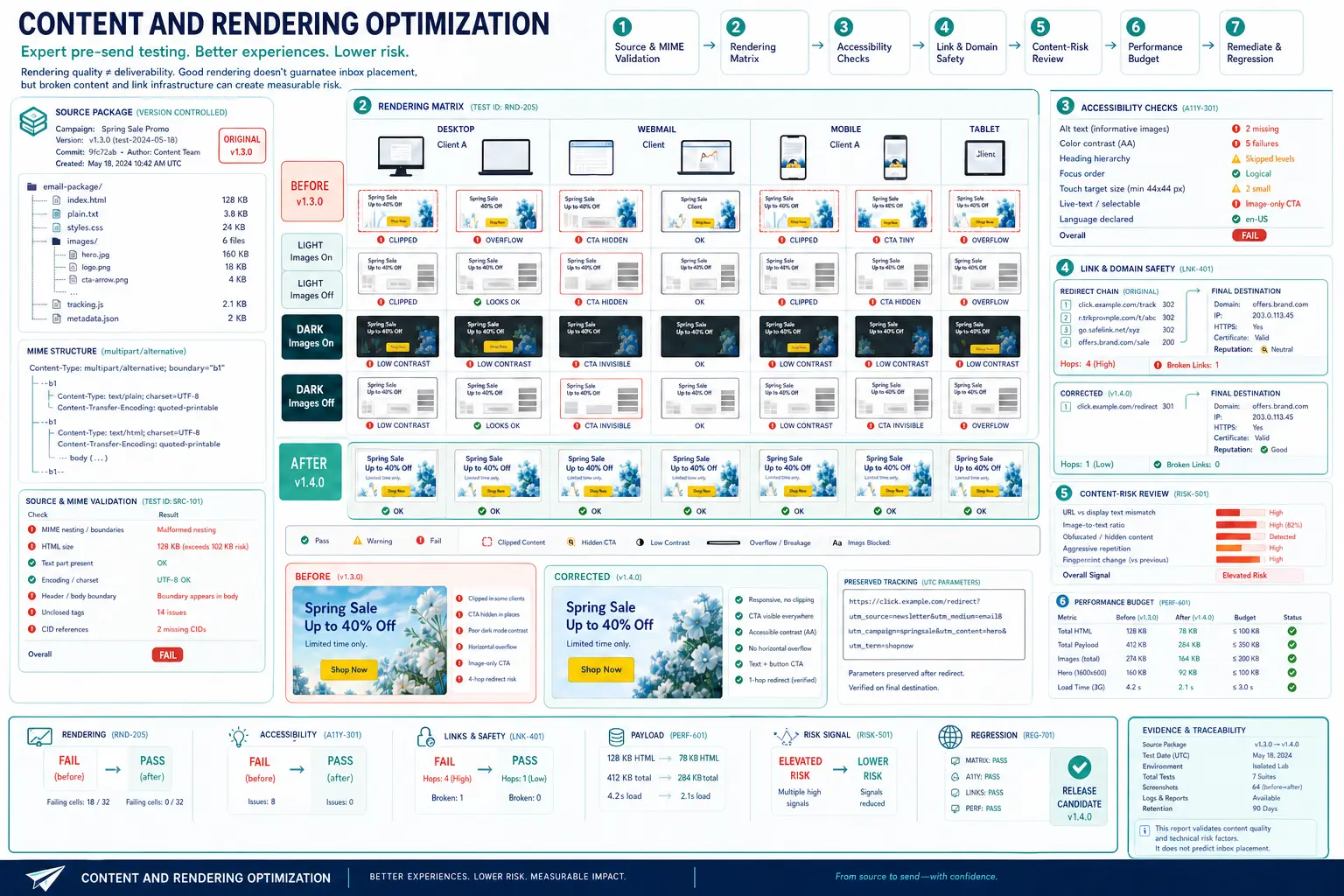
Make the message usable before asking the inbox to trust it
Content is one part of deliverability, but it can create real failures when the HTML is malformed, the mobile layout breaks, links pass through risky domains, accessibility is ignored, or a reused template carries a poor fingerprint.
NitWings reviews the message together with sender identity, routing, and provider evidence. Content changes are recommended when the evidence supports them, not as a substitute for fixing reputation, data, or infrastructure.
What the work covers
Spam-risk review
Review message structure, text and image balance, suspicious formatting, link behavior, domain reputation, tracking paths, and filtering clues before sending.
HTML structure validation
Check document structure, tables, inline CSS, unsupported elements, encoding, fallback behavior, image handling, and markup that can break or be rewritten by email clients.
Multi-client rendering previews
Preview and compare the message across Gmail, Outlook, Apple Mail, webmail, desktop, and representative mobile clients. Record meaningful differences instead of treating every visual variation as a defect.
Mobile rendering
Validate responsive behavior, scaling, tap targets, readable type, image sizing, stacking, dark-mode risks, and fallback presentation on smaller screens.
WCAG accessibility
Review semantic reading order, headings, alternative text, contrast, link meaning, keyboard and screen-reader behavior, motion, and the plain-text alternative.
Links and content fingerprints
Inspect destination domains, redirect chains, tracking hosts, HTTPS behavior, repeated template patterns, and content reuse that may connect a clean campaign to risky history.
How preview findings are used
A rendering preview is evidence, not a pass or fail badge. NitWings separates cosmetic client differences from problems that block reading, clicking, identification, consent, or unsubscribe behavior. The final recommendation records the affected clients, business impact, safe correction, and regression check.
Deliverables
Outputs can include annotated client previews, HTML findings, WCAG accessibility notes, mobile corrections, link and redirect findings, content-risk observations, template changes, and a reusable pre-send QA checklist.