
A provider starts slowing or rejecting mail
The SMTP response has changed, while other providers may still accept the same traffic.
When mail is delayed, rejected, or sent to spam, the cause is rarely one setting. NitWings traces the live sending path across DNS, authentication, reputation, the MTA, Linux or cloud infrastructure, provider responses, and the inbox. The fault is fixed only after the evidence shows where it began.

A message can pass SPF and still fail DMARC. An empty queue does not prove inbox delivery. A blocklist listing may be a result, not the cause. These are the situations where a proper investigation usually starts.
The SMTP response has changed, while other providers may still accept the same traffic.
Messages reach the provider but move to spam, disappear, or behave differently for one audience.
Blocklist activity, complaints, bounce changes, poor segmentation, or sending history is affecting reputation.
The return-path, DKIM selector, From domain, DNS, or relay route does not match the expected setup.
The cause may be remote throttling, DNS, routing, capacity, connection handling, or a local service.
A deployment, IP change, new region, firewall rule, MTA setting, or Linux change has altered behavior.
Email Deliverability receives the most space because it is the primary NitWings service. MTA and Linux, Multi-Cloud, and DevOps are complete technical offerings with their own scope and engagement path.
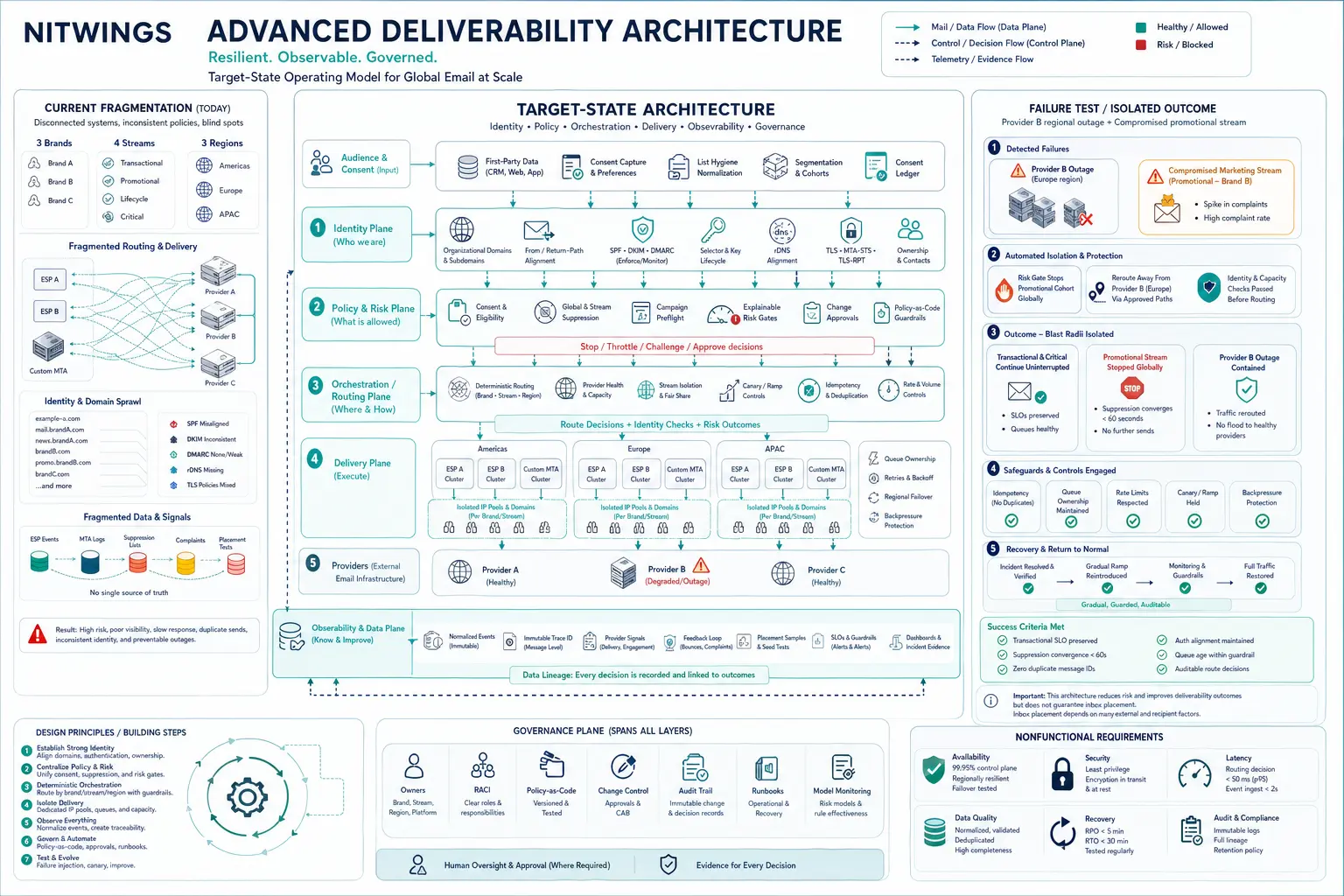 01 · Primary service
Audits, inbox placement, reputation, authentication, DNS, feedback loops, Postmaster data, SMTP analysis, warmup, segmentation, list quality, monitoring, compliance, reporting, architecture, and incident recovery.
Explore Email Deliverability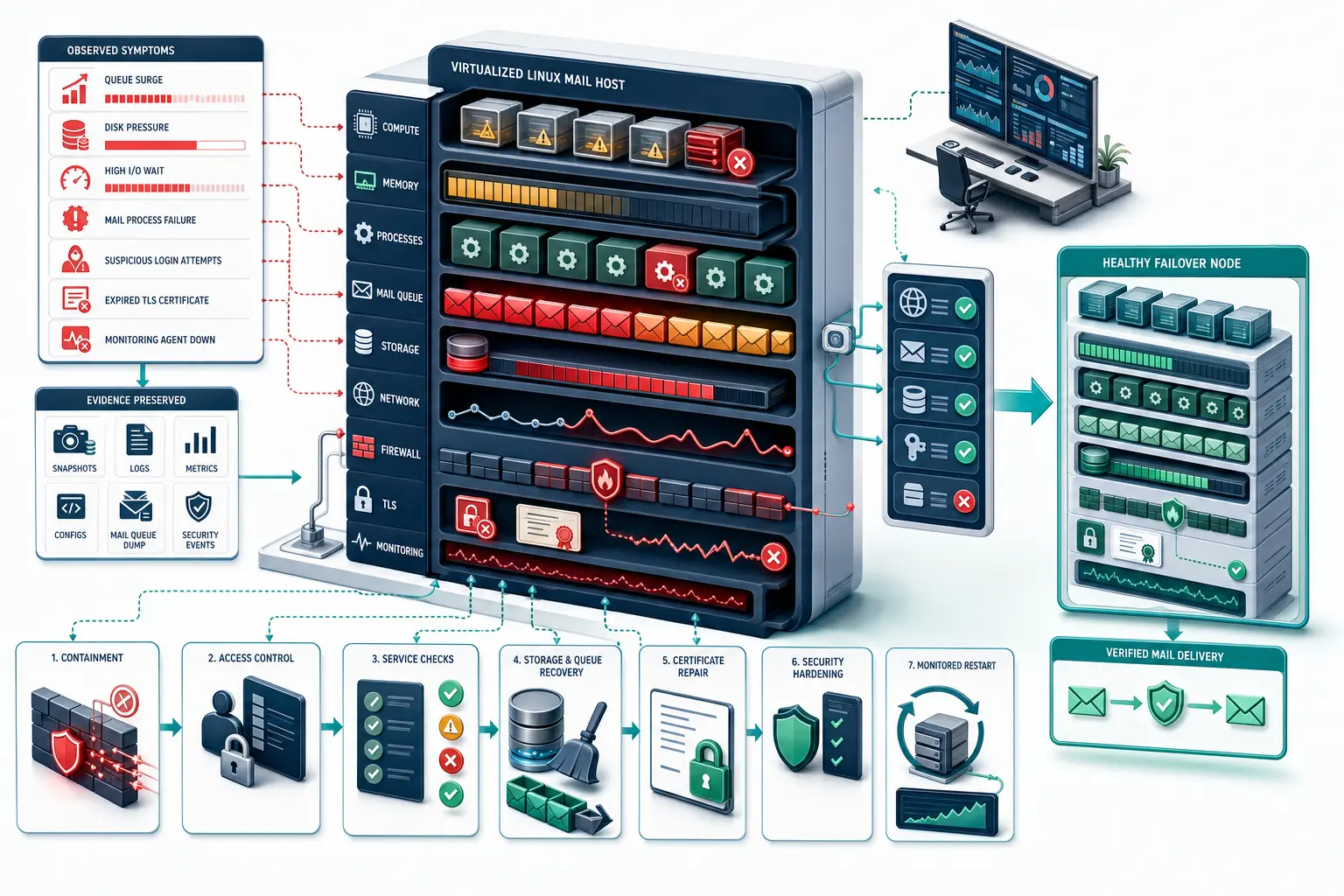 02
02Architecture, deployment, administration, hardening, queues, routing, IP pools, throttling, logs, monitoring, high availability, backup, migration, tuning, and incident support.
Explore MTA and Linux
AWS, Microsoft Azure, Google Cloud Platform, hybrid architecture, networking, IAM, compute, containers, Kubernetes, data, security, observability, resilience, and cost control.
Explore Multi-Cloud
CI/CD, infrastructure as code, Docker, Kubernetes, GitOps, release automation, testing, observability, DevSecOps, reliability, incident management, and documentation.
Explore DevOpsThe investigation follows a real production message. Each layer must agree with the next, and the evidence must match what happened on the live route.
Who is being mailed, how the audience was built, what is being sent, volume, cadence, complaints, bounces, and stream separation.
From domain, return-path, SPF, DKIM, DMARC, selectors, headers, HELO, rDNS, TLS, and DNS answers.
Queue, route, retry, bounce handling, IP pools, MTA policy, Linux services, cloud capacity, and connection behavior.
Acceptance, deferral, complaint feedback, reputation, blocklists, filtering, rate limits, and published policy.
Placement, rendering, seed evidence, postmaster data, user response, validation, and ongoing monitoring.
A useful engagement does not end with a long recommendation list. It leaves a clear technical record that another engineer can understand and operate.
See how the work is verified →A concise explanation of the affected traffic, identity, route, provider, infrastructure layer, and evidence behind the conclusion.
Changes arranged in a safe order, with dependencies, ownership, risk, and rollback conditions recorded.
Proof from the affected route using received headers, SMTP behavior, queues, provider signals, and monitoring.
Useful baselines, alerts, runbooks, named owners, and a clear next action if the problem returns.
Tools support the work, but they do not replace judgment. DNS checkers, seed tests, dashboards, and provider portals are useful only when tied back to the real message path.
Confirm the affected traffic, provider, identity, route, timeline, recent changes, and business impact.
Agreed scope and evidence listCompare headers, DNS, SMTP responses, provider data, MTA logs, monitoring, and the sending history.
Written cause and supporting evidenceChange the demonstrated fault with a named owner, a rollback condition, and unrelated variables held steady.
Controlled implementation and rollbackCheck production behavior on the affected route and leave useful thresholds, alerts, and operating notes.
Validation record and handoverYou do not need to diagnose it before making contact. Say what changed, where the failure appears, and what you have already checked. NitWings will tell you what evidence is useful next.
Practical guides for diagnosing sender identity, reputation, queues, Linux, cloud, and monitoring failures.
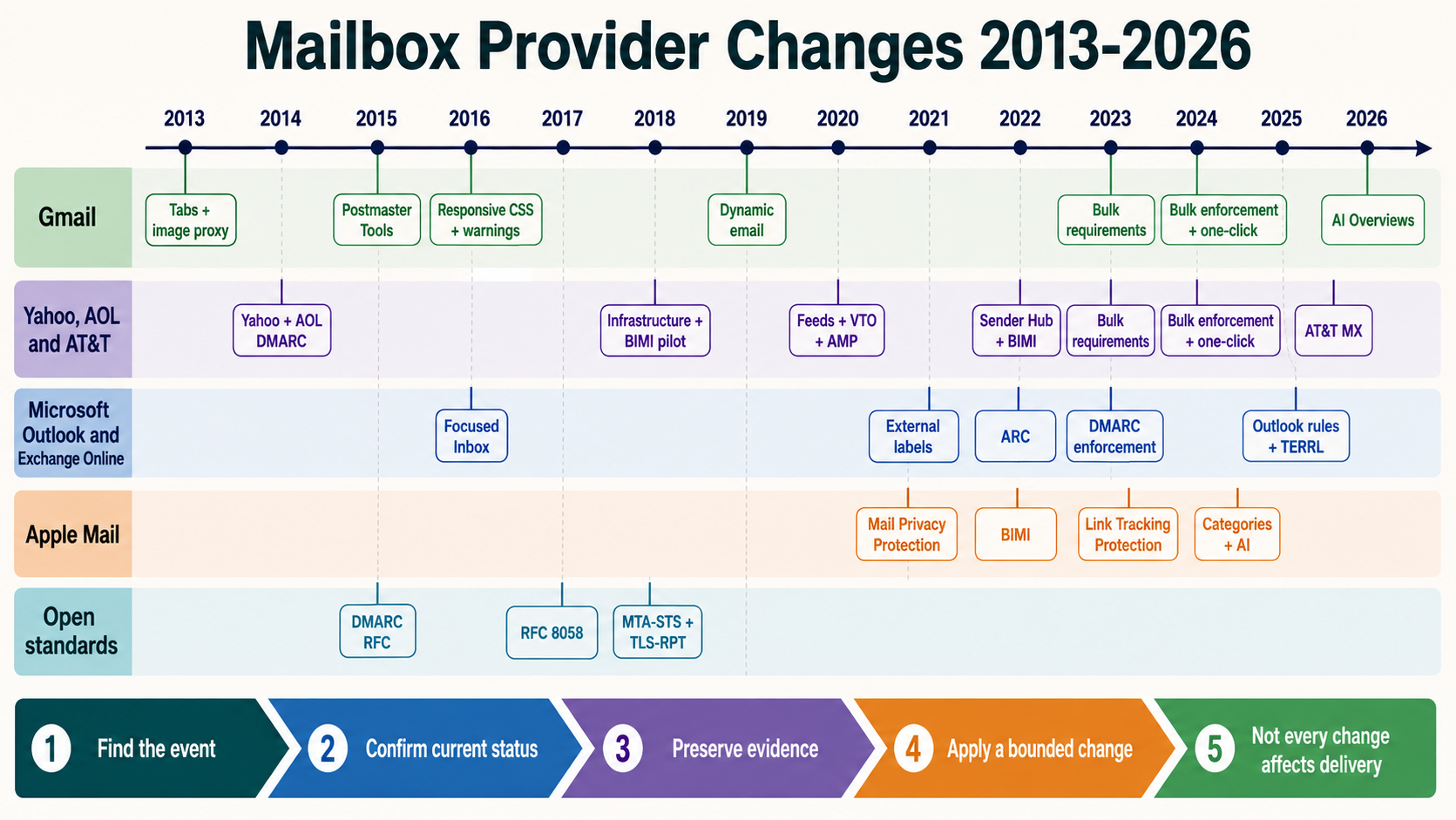 Email Deliverability · Sep 3, 2026 · 16 min read
A verified 2013-2026 timeline of 65 mailbox-provider and email-standard changes, with technical guides for deliverability, visibility, identity and measurement.
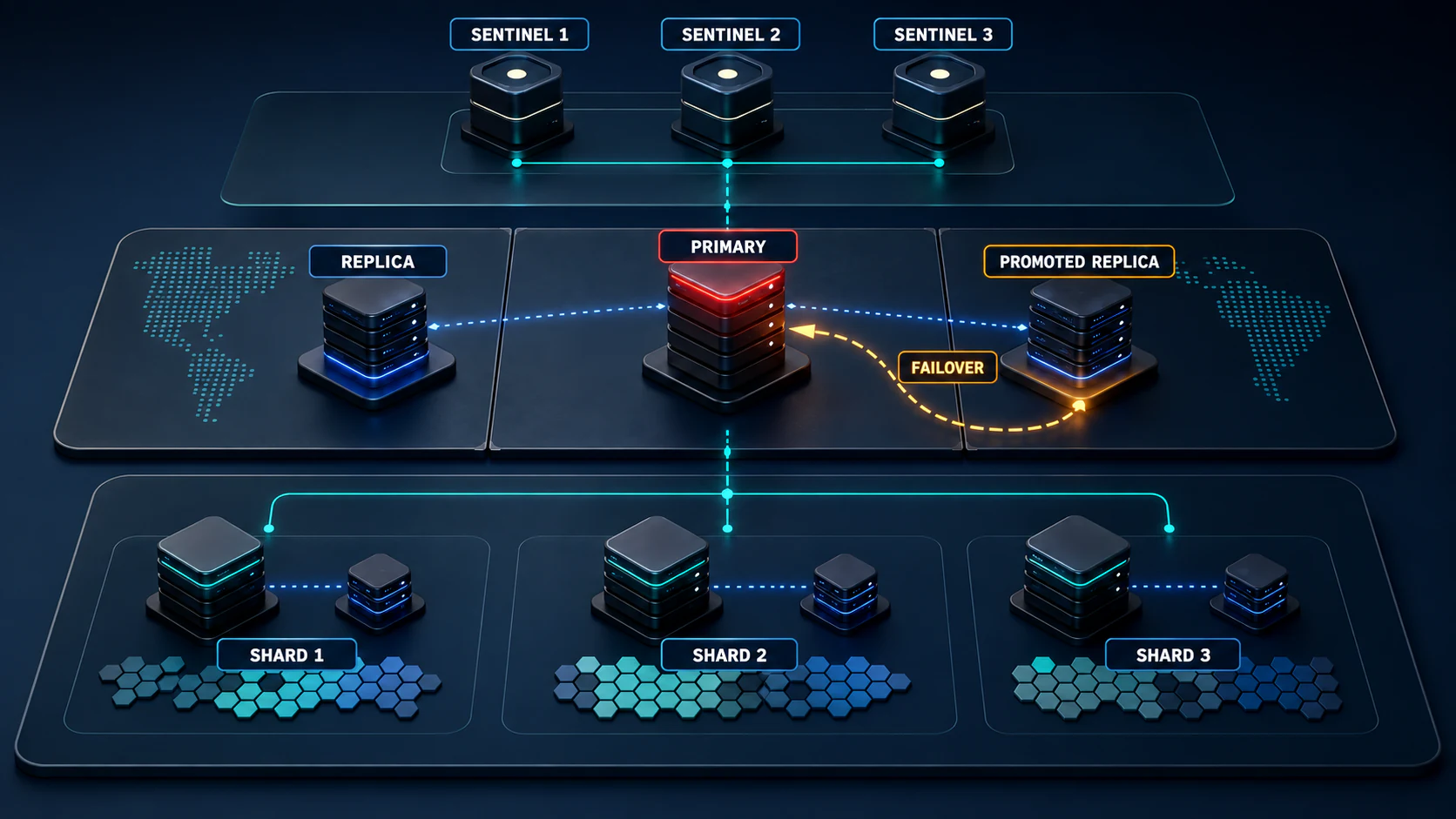
Build Redis replication, Sentinel failover, and a six-node Cluster with validation, troubleshooting, per-shard backup, and isolated recovery.
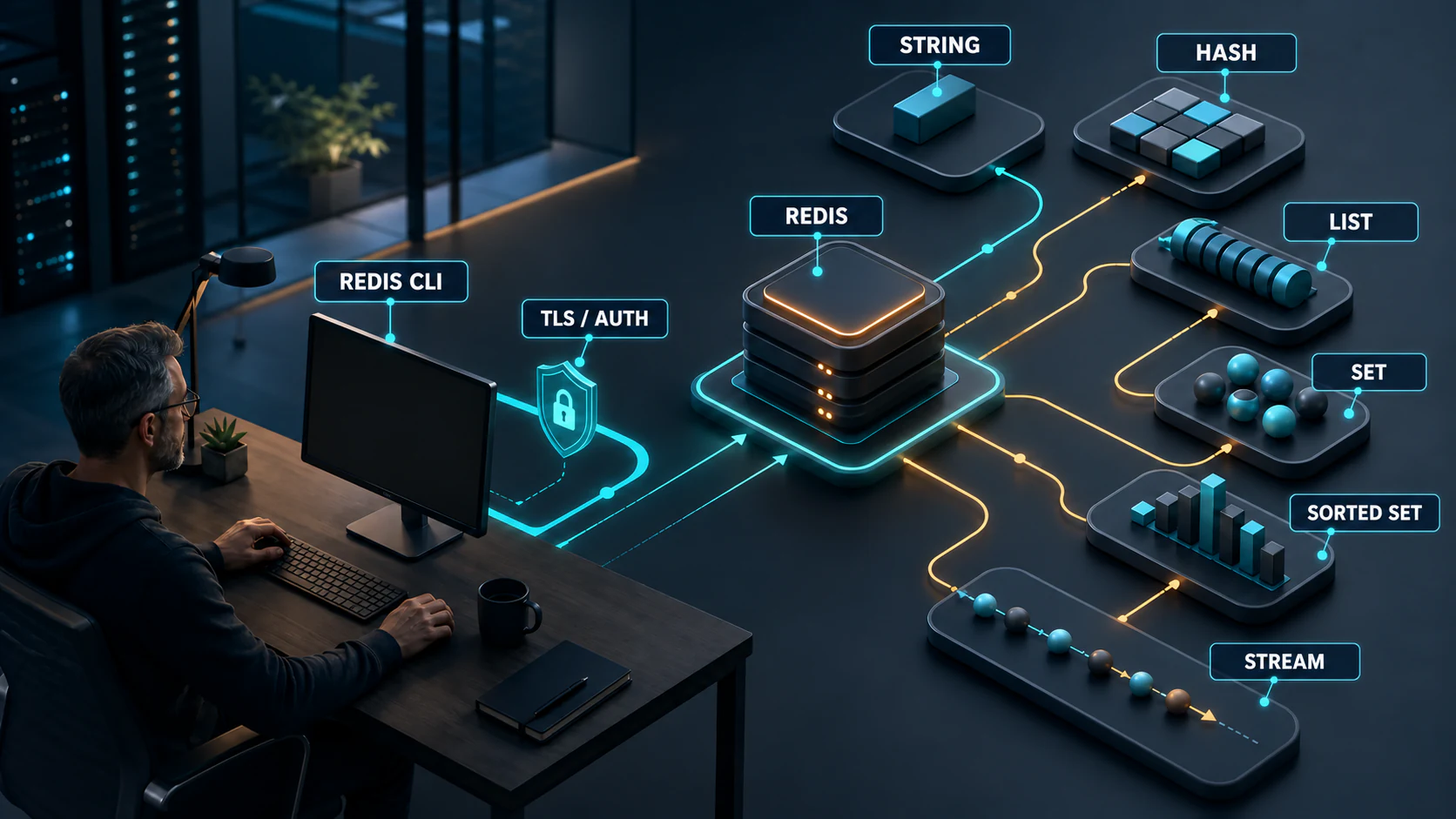
Operate Redis safely with redis-cli, current online and classic backups, restores, troubleshooting, large-key analysis, migrations, and admin utilities.