
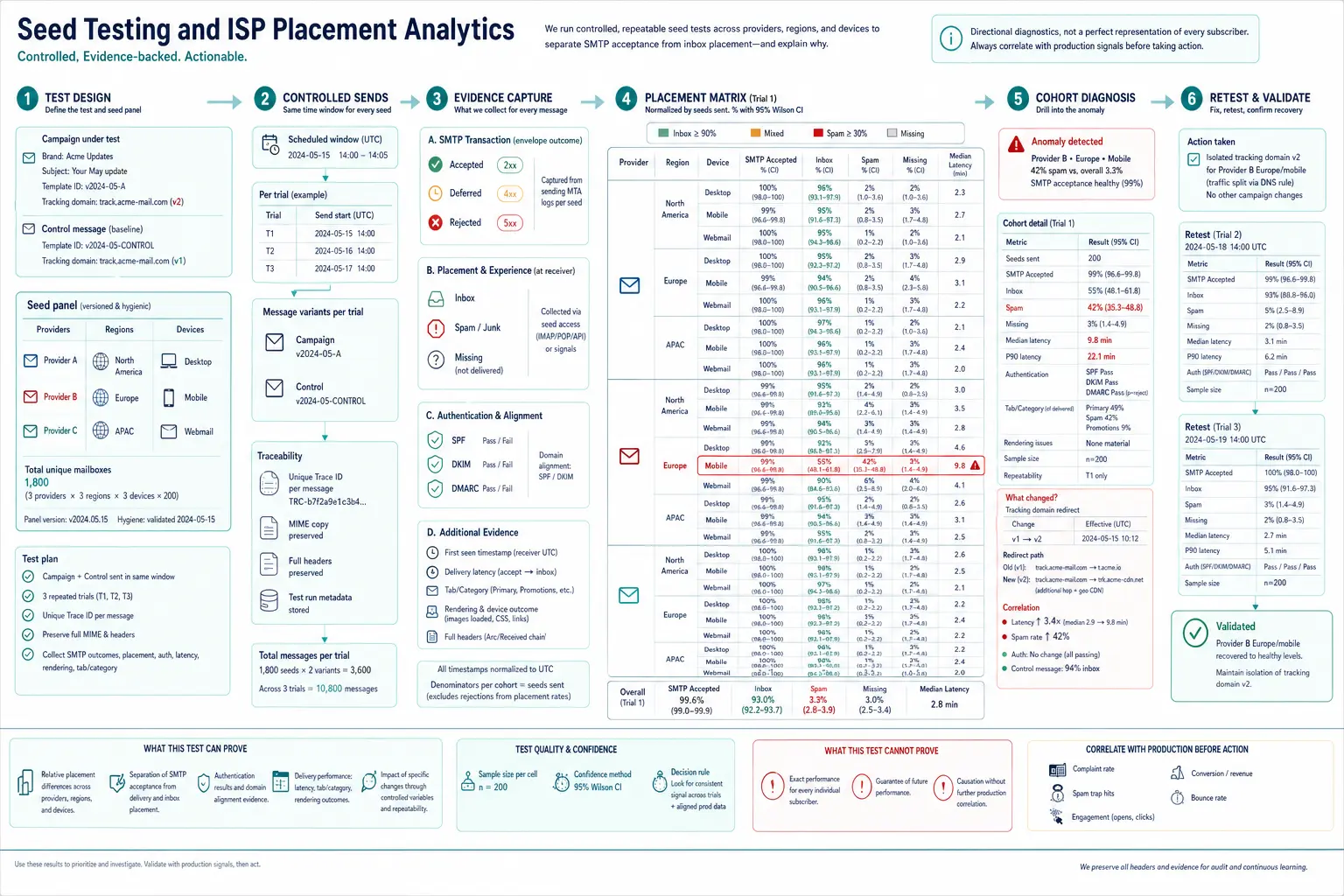
Measure placement, then test one change at a time
Seed results are useful only when they are connected to the real sending stream. NitWings compares inbox, spam, and missing placement with authentication, provider response, reputation, audience quality, content, cadence, and infrastructure behavior.
The goal is not a decorative placement score. The goal is to identify what changed, which providers are affected, and which controlled test can confirm the next decision.
What the work covers
Seed and ISP placement
Measure inbox, spam, and missing placement across Gmail, Outlook, Yahoo, enterprise filters, regional providers, geographies, and sending streams.
Pre-send validation
Check authentication, sender identity, headers, unsubscribe controls, list risk, content structure, links, reputation, routing, and campaign readiness before release.
Controlled A/B deliverability testing
Compare subject lines, content, cadence, audience, sending pattern, or infrastructure while holding the other variables steady. Results are segmented by provider and traffic stream.
Campaign comparison
Compare placement with SMTP response, complaints, bounces, engagement, Postmaster data, SNDS, blocklists, and recent operational changes.
Rendering handoff
Connect placement findings with cross-client preview results when HTML, mobile behavior, accessibility, links, or template structure may be contributing to poor outcomes.
Decision record
Document the tested variable, control, audience, provider split, result, confidence, next action, and condition that would stop or reverse the change.
How A/B testing stays useful
One test should answer one operational question. NitWings avoids changing the domain, pool, audience, volume, content, and timing together because the result would not show which change mattered. Tests use representative traffic, a clear control, provider-level reporting, and a validation window long enough to avoid reacting to noise.
Deliverables
Outputs can include the seed plan, pre-send checklist, provider-level placement report, controlled test design, campaign comparison, likely root causes, corrective actions, and a repeatable validation workflow.