Grow traffic without hiding risk in the average
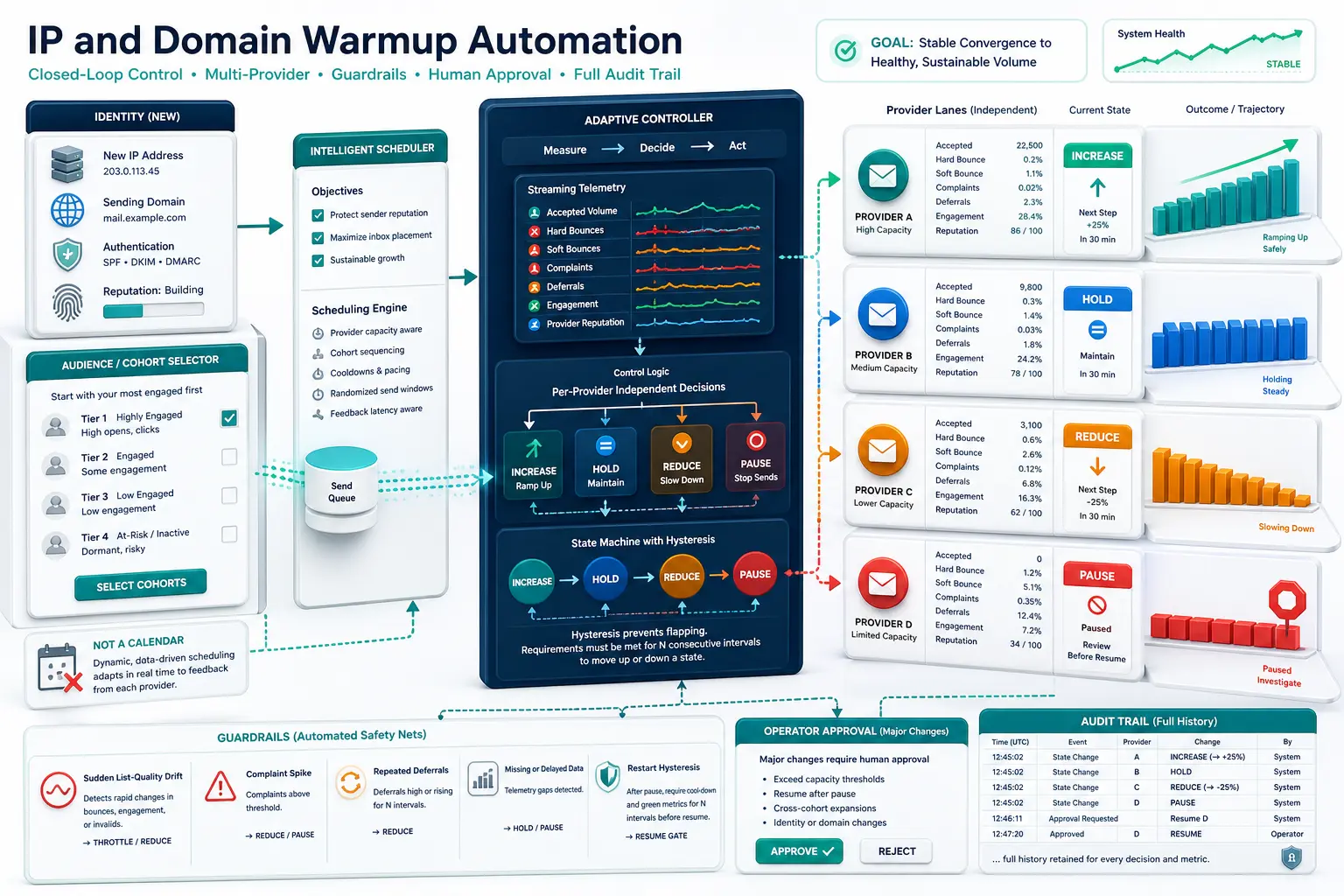
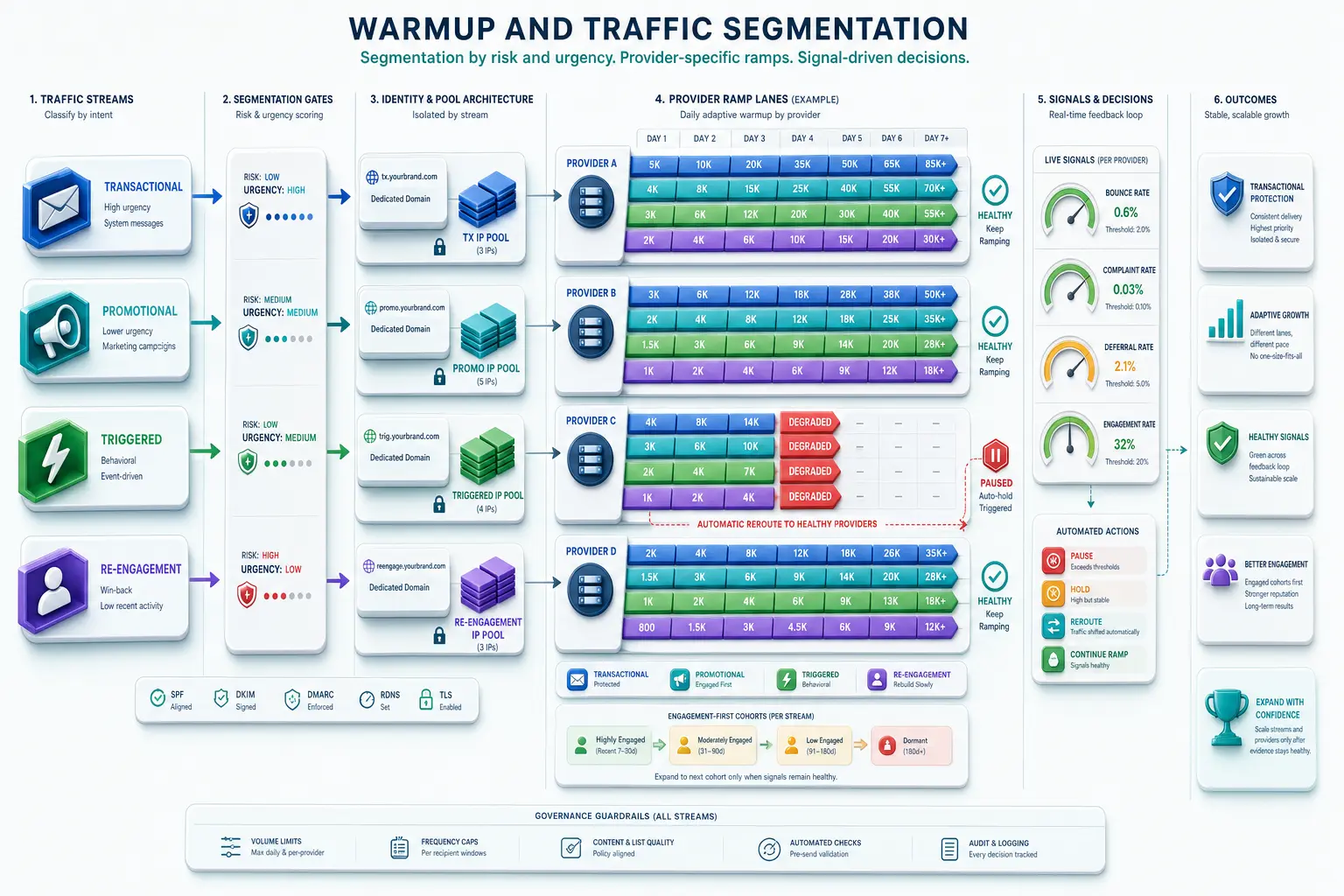
NitWings plans sending ramps for new IPs, domains, ESP migrations, and new traffic streams. Volume decisions use audience quality, authentication, bounce behavior, complaints, engagement, provider response, and the history of the specific stream.
Warmup is only one part of sending strategy. Timing, frequency, provider controls, pool design, and regional routing must support the same sender identity and audience promise.
What the work covers
IP and domain warmup
Build a staged volume plan with provider splits, audience selection, pause thresholds, rollback conditions, and daily evidence for safe growth.
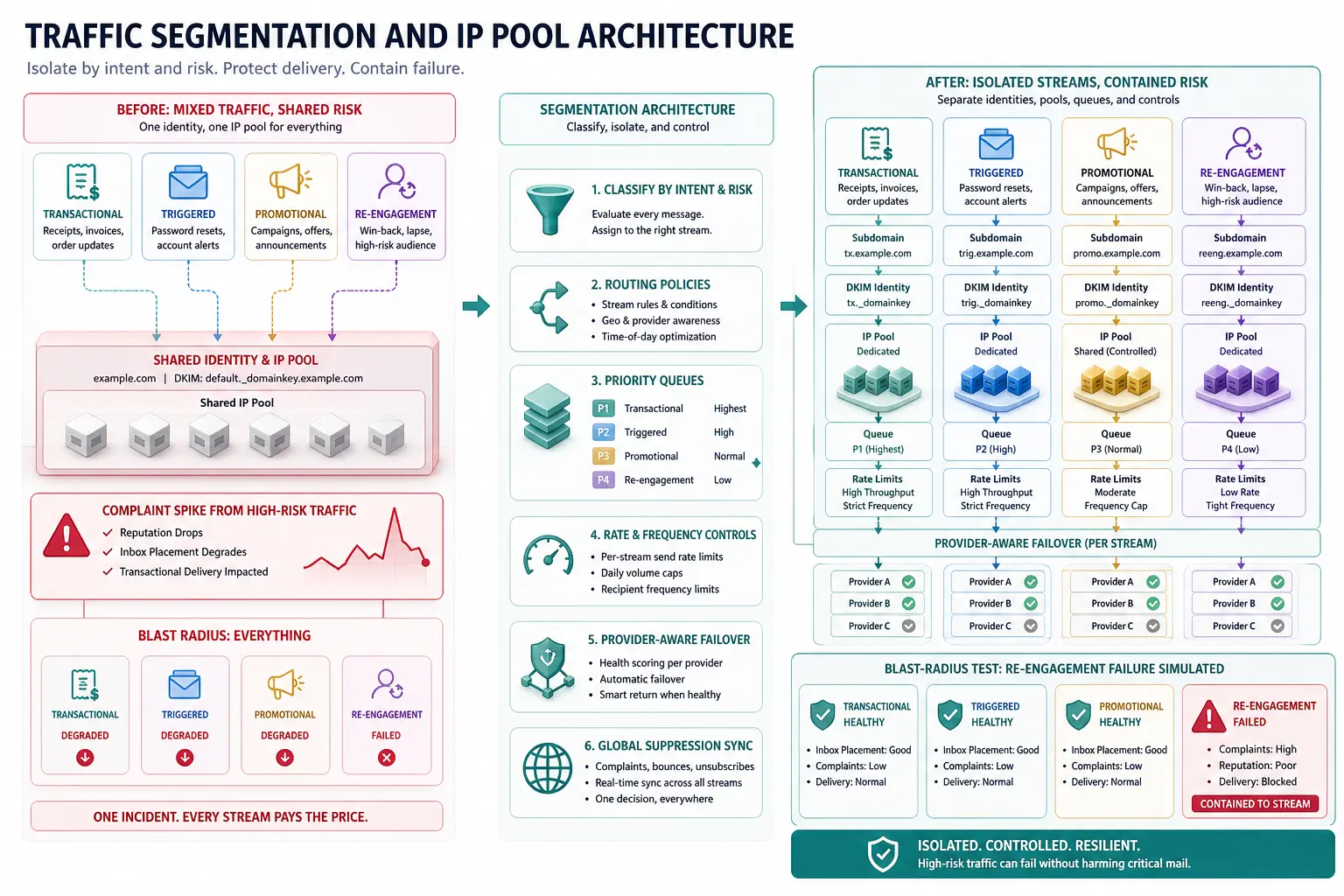
Traffic streams and pools
Separate promotional, transactional, triggered, lifecycle, and higher-risk traffic using appropriate domains, return paths, List-ID values, IP pools, and operating policies.
ISP-specific throttling
Adjust connection rate, concurrency, retry, backoff, and volume by provider using live SMTP responses instead of applying one global limit.
Send-time optimization
Use historical engagement, time zone, provider response, message purpose, and audience behavior to choose useful delivery windows. Validate the change against complaints, bounces, placement, and business results.
Frequency governance
Define contact limits by stream and engagement state, coordinate overlapping campaigns, protect fatigued users, and connect exceptions to consent and suppression rules.
Geo-based sending strategy
Route or schedule traffic by region when latency, infrastructure proximity, data policy, mailbox mix, language, time zone, or provider behavior creates a real operational reason.
How the strategy is validated
NitWings compares each change with a known baseline by provider, stream, domain, pool, geography, and audience cohort. Growth continues only while authentication remains stable, complaints and bounces stay controlled, deferrals recover, and the intended traffic reaches the expected recipients.
Deliverables
Outputs can include the warmup schedule, traffic taxonomy, pool and domain map, provider limits, send-time model, frequency rules, regional routing plan, thresholds, rollback conditions, monitoring view, and operating handover.